In October 2024, Conxemar closed with 27,080 visitors from 110 countries and more than 750 exhibitors. The 37,000 square metres of IFEVI were sold out and there was a waiting list.
The average exhibitor spends months preparing the product, negotiating with buyers and designing the stand, yet many leave an important decision until the last few weeks, namely who is going to be there.
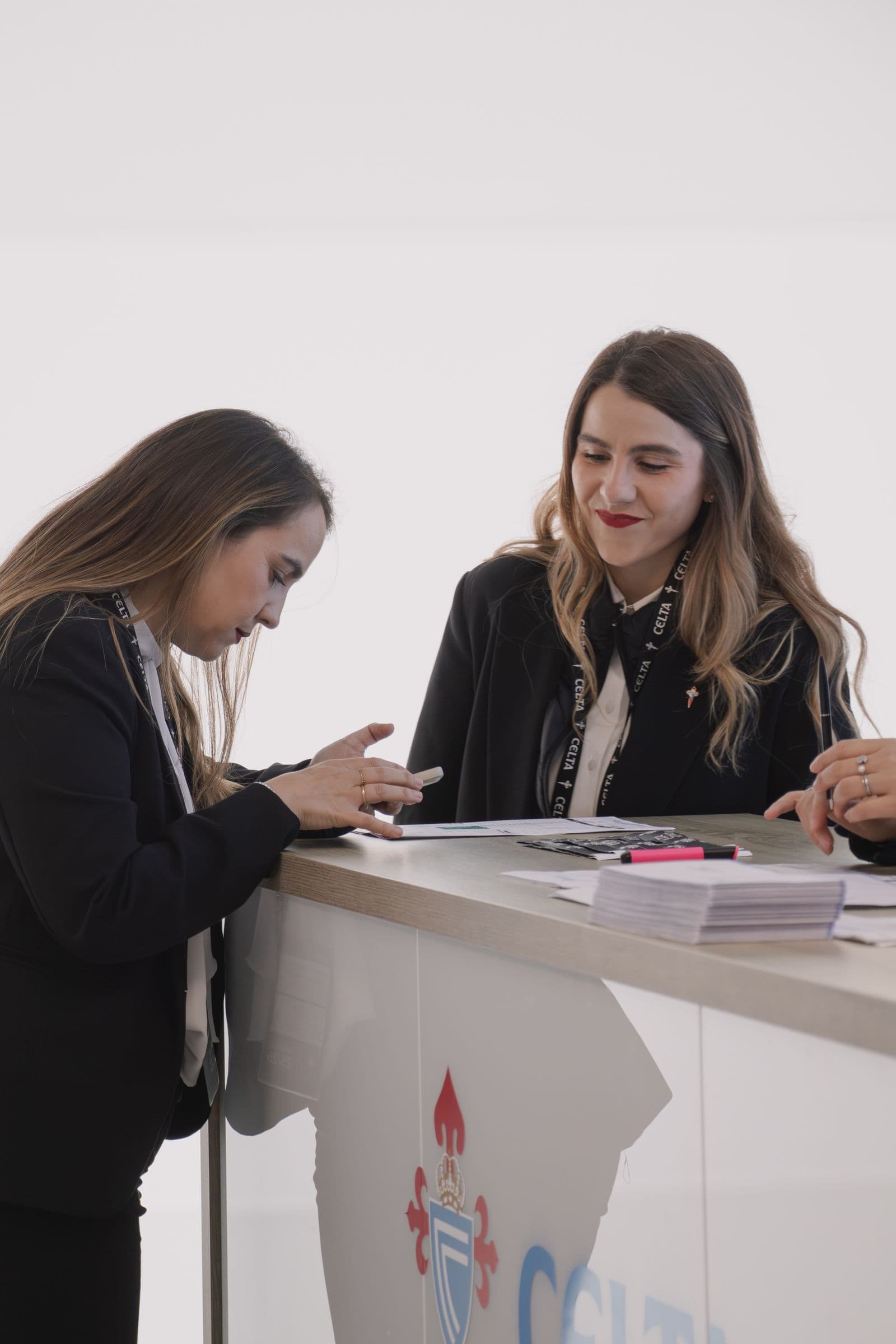
Besides the sales team, you need people to welcome visitors, screen them, restock brochures or look after the Japanese buyer who does not speak Spanish.
In this article we go through the profiles you need at an industrial trade fair and how to work out how many people to hire.
The cost of getting it wrong
The stand, the travel and your sales team's time cost a lot of money. Putting people there who do not know what to do, or not putting enough of them, means throwing away part of that investment.
The four profiles that work
At the industrial trade fairs in Galicia where we have worked, these are the profiles that work best.
1. Qualified filter
Their job is to speak first with whoever approaches, work out whether they are a potential client, a competitor or simply curious, and either refer them on or see them off politely.
A good filter frees your sales staff to talk only to the people who matter. At a large three-day fair, that shows in the number of useful meetings that come out of the stand.
Profile: someone who finds conversation easy, has at least a basic grasp of your sector (or can learn it in a 2-hour briefing) and is not afraid to ask "How can I help you?".
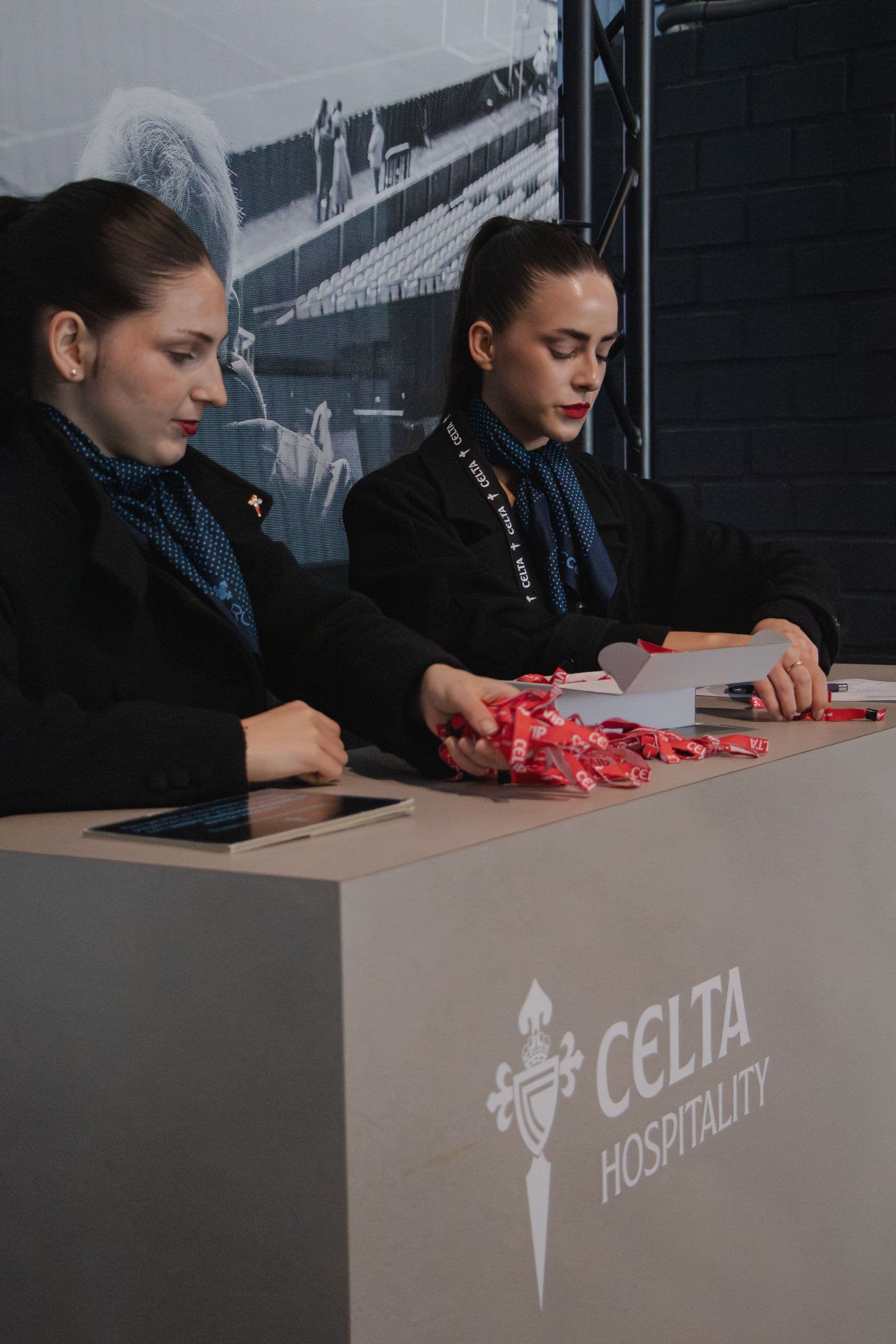
2. Stand support
Their job is to make sure you never run out of brochures, business cards, water, coffee or samples, that the table stays tidy and that someone deals with any parcels that arrive mid-fair.
It looks like a minor task, but if your salesperson has to go and fetch leaflets in the middle of a conversation, they cut it short and lose momentum, which is essential at a fair.
Profile: someone organised and discreet who does not need instructions every 10 minutes.
3. Languages
If your fair has international visitors (Conxemar welcomes people from 110 countries), you need someone who speaks English fluently, not at an "intermediate level".
Depending on your market, you may also need Portuguese for buyers from Brazil and Portugal, French for French-speaking Africa or German if you work with Central European distributors.
Profile: a certified or demonstrable level. If in doubt, ask for a trial call.
4. Stand coordinator
Only if you have a large stand (over 50 m²) or several external profiles. Their job is to make sure everyone knows what to do, manage the shifts and solve problems without you having to step in.
Profile: someone with real trade fair experience who has coordinated teams before and knows how to improvise.
How many people you need
There is no exact formula, but there are benchmarks that work:
| Stand size | Support staff | Notes |
|---|---|---|
| Up to 20 m² | 1–2 people | Plus your sales team. They can rotate roles. |
| 21–50 m² | 2–3 people | Ideally one filter and one support. Add one for languages. |
| 51–100 m² | 3–5 people | At this point you need a coordinator, even part-time. |
| Over 100 m² | 5 or more people | Dedicated coordinator, clear shifts and a plan B for absences. |
Important: these figures are for peak times. People arrive in waves, especially first thing in the morning and after lunch. If you plan for the average flow, you will fall short just when you need it most.
A question worth asking
When you contact staffing providers, one question goes a long way towards telling the good ones apart:
"Have you worked at this fair before?"
If the answer is yes, you gain a great deal:
- They know the venue (where the toilets are, where to eat, where there is mobile signal)
- They are clear about the real schedules, not the ones in the programme
- They have already dealt with the security, cleaning and build-up staff
- They know which problems tend to come up and how to solve them
That is not something you learn in a briefing. You learn it by working there.
The briefing that works
Once the staff are hired, they need to know what to do.
An effective briefing covers:
- What your company does (in two minutes, not the full history)
- What you are selling at this fair (a specific product, not "comprehensive solutions")
- Who is a client and who is not (the ideal buyer profile and signs that someone does not fit it)
- What to do in each situation (an interested visitor is passed to salesperson X, a competitor is seen off with a smile and a supplier's contact details are noted down)
- Logistics (where the materials are, how they are restocked, who has the keys, break times)
Do it before the fair, not on the first day at 8 in the morning with everyone on edge.
Three common mistakes
Hiring on Thursday for a fair that starts on Tuesday.
Good staff are booked weeks in advance. If you call at the last minute, you end up with whoever is free, which is not always the profile you were looking for.
Not giving context.
"Stay on the stand and look after people" is too vague to work as an instruction. If you do not explain what you want, you cannot complain about the result.
Ignoring the team's feedback.
Stand staff see things you do not see, such as what visitors ask, what they do not understand and what surprises them. If you do not ask them, you lose information that is worth money.
What affects the price
The cost depends mainly on the number of people and the hours of the fair. Languages and the experience of each profile also play a part, as does whether you need someone to coordinate the team. If the fair is not local, travel and subsistence costs must be added. In high season it is harder to find good profiles, so the more notice you have, the easier it will be to put together the team you want.
The most practical approach is to ask for a fixed quote based on the details of the fair. That way you can make a genuine comparison and avoid surprises on the invoice.
Final thoughts
Conxemar, Navalia, Mindtech and the industrial fairs at IFEVI are full and have waiting lists.
If you are going to invest in exhibiting, invest in the team that represents you as well. It is not the biggest expense of the fair, but it can make a real difference to the result.
If you are exhibiting in Galicia and need staff, get in touch. We have worked at Conxemar, Navalia and industrial events at IFEVI, Palexco and ExpoCoruña. We know the venues, their schedules and the usual problems, and we work with people who come back to us because they want to.